Antonio Ocaranza Fernández
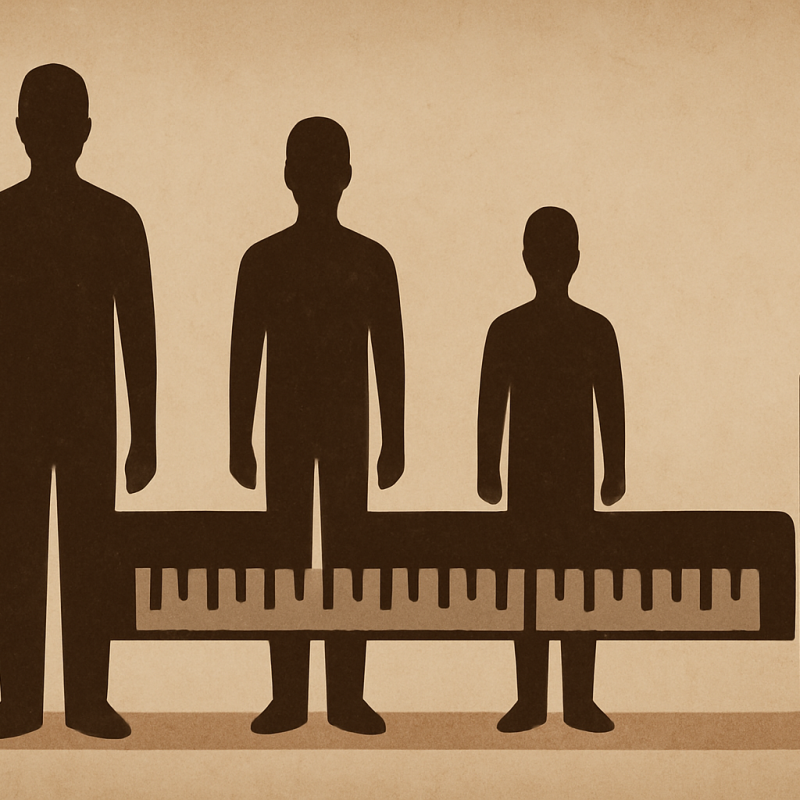
In Greek mythology, Procrustes offered travelers rest, but his hospitality hid extreme cruelty: he forced his guests to lie down on a bed that never matched their size and then stretched or cut off their limbs to fit them to it. His obsession was clear: that the traveler fit his mold. Today, the myth of Procrustes has been revived to describe those who seek to limit, cut back, or neutralize those who think differently, stand out, or break with uniformity. In politics, this logic manifests itself when those in power attempt to homogenize reality, control the narrative, and punish those who excel.
The administrations of Andrés Manuel López Obrador and Claudia Sheinbaum have characteristics that allow them to be interpreted through this metaphor. Despite significant achievements in political stability, social programs, and expanding popular support, during their terms in office, the space for plurality and informed debate has been reduced. There are five characteristics of the Procrustean syndrome that seem to apply to the governments of the Fourth Transformation: shaping reality to fit their agenda, attacking critics, neutralizing threats, imposing uniformity, and building institutions to suit their needs.
- Shaping reality to suit. The phrase “I have other data” became the emblem of a government that prioritized its narrative over empirical evidence. When faced with figures on security, the economy, the pandemic, or institutional performance, the response was repeatedly to question sources, discredit technical agencies, or replace facts with a higher political truth. This manipulation of the narrative generated public confusion, eroded confidence in official data, and weakened institutions dedicated to producing verifiable information. López Obrador even promised a new way of measuring social welfare, which he never implemented. In an environment where data must submit to the narrative, Procrustes’ bed becomes an obligatory reference: anything that does not coincide with the official version is “cut” or denied.
- Belittling and attacking criticism. Polarizing discourse that labels critics as conservatives, neoliberals, “vultures,” traitors, or corrupt individuals has reduced the space for reasoned deliberation. In a democracy, criticism is a driver of improvement; in a Procrustean environment, it is interpreted as a threat and responded to with disqualification. Journalists, academics, civil organizations, and independent voices have faced pressure and stigmatization from those in power. In this climate, plurality is uncomfortable and dissent is penalized. For the Fourth Transformation, difference was intolerable and could only be explained as an attempt to destroy its project.
- Neutralizing potential threats. Personalistic leadership tends to perceive the abilities or ambitions of others as a risk; therefore, loyalty weighs more heavily than individual brilliance. The presidential succession was carefully managed to ensure political and ideological continuity, and the narrative dominance within the movement is based on a hierarchy where standing out can be costly. New business or media leaders, such as Ricardo Salinas Pliego, represent threats. In the myth, no one could be greater than Procrustes; in politics, no one should shine above the leader without taking risks.
- Imposing ideological uniformity. Claudia Sheinbaum’s administration maintains discursive and programmatic continuity with her predecessor, with a more institutional style, but under the same premise: internal cohesion is a priority. Appointments that privilege political affinity, distrust of autonomous bodies, and pressure to maintain a homogeneous narrative reflect a Procrustean logic of uniformity. The risk is clear: when talent is subordinated to loyalty, innovation is weakened, internal criticism is silenced, and institutions become instruments of ideological validation rather than public service.
- A bed made to measure. Mexico is being shaped based on the political vision of the Fourth Transformation. Anything that does not fit into this vision is cut off. Morena’s electoral victory, its control of Congress, and popular support for the government’s project give President Sheinbaum the opportunity to shape Mexican institutions. Judicial reform, the disappearance of autonomous bodies, and the upcoming electoral reform are signs of this institutional ambition.
It is legitimate to aspire to transform inherited structures, but Mexico’s challenge is to do so without amputating plurality, without stretching reality until it breaks, without punishing independent thought. A mature democracy does not diminish those who excel or flatten debate: it expands the bed, it does not force people to fit into it. True democratic transformation does not consist of cutting back on citizens to fit them into the political project, but rather expanding the project to contain the diversity of the nation.