Antonio Ocaranza Fernández
A hurricane or an earthquake starkly reveals the strength of institutions and the leadership skills of those who head them. At such times, the difference between a competent government and a clumsy one lies not in the extent of the material damage, but in the speed and effectiveness with which public confidence is restored. When the authorities’ response fails to meet people’s expectations, misfortune becomes a breeding ground for grievances and complaints that can lead to currents of opinion contrary to the governments in power. Disasters do not invent ineptitude: they expose it.
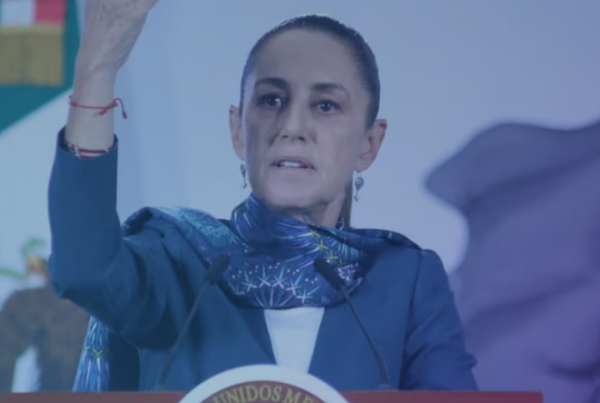
The government of President Claudia Sheinbaum has had to act quickly, not only because of the magnitude of the tragedy caused by the storms that affected Veracruz, Hidalgo, Puebla, and Querétaro, but also because natural disasters have political consequences. With her visits to the affected areas and her press conferences, the president seeks to keep the public’s attention on what is being done, to project that she is acting swiftly, and to respond promptly to criticism before it becomes widely accepted as truth.
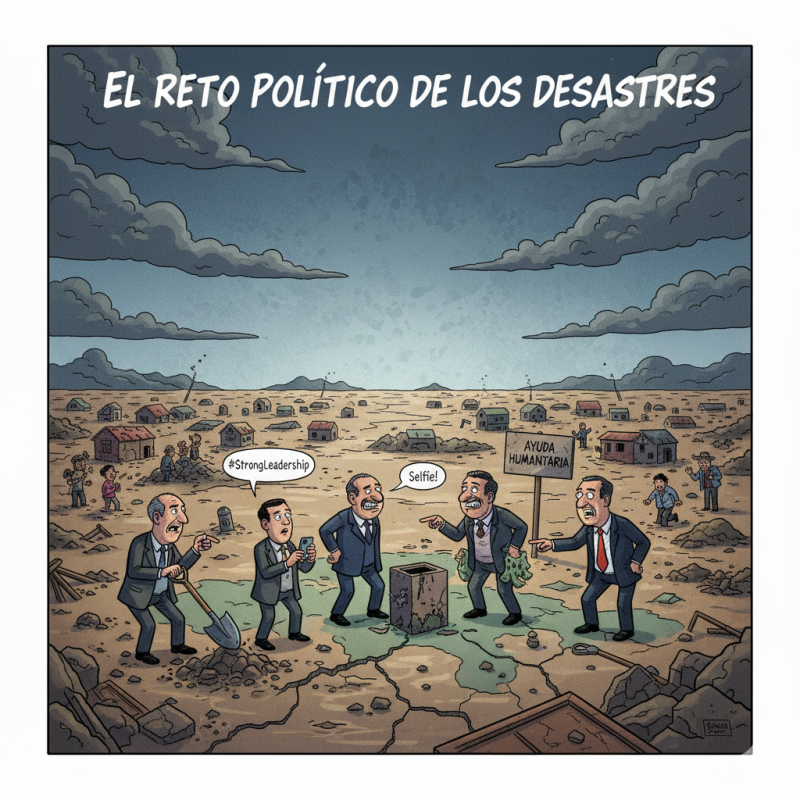
The president faces three threats that every tragedy poses to a government: incompetence, corruption, and insensitivity.
- Incompetence. Government responses to major natural disasters are, more often than not, inadequate. No amount of preparation can guarantee an optimal response, because the magnitude of the tragedy often exceeds the human and material resources available. Effectiveness can also be affected by a lack of coordination between federal and state authorities. The most a government can do is try to quickly close the gap between its actions and the expectations of the victims and society as a whole, because the greater the gap, the greater the social perception that the government is incapable of meeting their needs.
- Corruption. Often, people seek explanations for the disaster they have suffered not in nature itself—in a storm or an earthquake—but in the actions or omissions of the authorities who failed to prevent or mitigate it. They point to investments that were never made to dredge drains or rivers, the lack of levees, building permits granted in unsuitable areas, the use of poor-quality materials, or the non-existence of ambulances and vehicles that were supposedly purchased. The disaster fuels the interpretation, so common in our society, that public corruption is the real cause behind the tragedy.
- Insensitivity. In tragedies, emotions overflow and become currents of feeling that rulers find very difficult to navigate. An official’s disconnect from the helplessness of a community is reflected in something as simple as the cleanliness of their hands or shoes, the care of their hairstyle, or their distant attitude when listening. The victim is left with the impression that the government official does not know what they are suffering, does not understand the distress they are experiencing, and does not identify with their anguish.
President Sheinbaum’s control of the levers of power and her popularity reduce the impact of criticism for corruption or insensitivity. But of the three, ineptitude is her most dangerous threat.
Beyond distributing money through social programs or making progress in reducing poverty, Morena governments have been characterized by mediocre performance. Economic growth has remained at a meager 1% per year. None of its major projects—the Maya Train, the Dos Bocas refinery, the Felipe Ángeles airport, or the Mexicana airline, for example—have met their deadlines or projected costs, and they continue to represent losses for the treasury. In the polls, the president’s high popularity contrasts with low ratings on security, the economy, and the fight against corruption.
Natural disasters are inevitable; politicians are not. But when they coincide, what remains in plain sight are not only collapsed houses or destroyed roads, but also the credibility or discredit of a government. In politics, the most feared disaster is not natural: it is the one that arises from the inability to respond in a timely and truthful manner. In the coming years, the Mexican government runs the risk that any mediocre response to future natural tragedies will reinforce the impression of incompetence.