Antonio Ocaranza Fernández
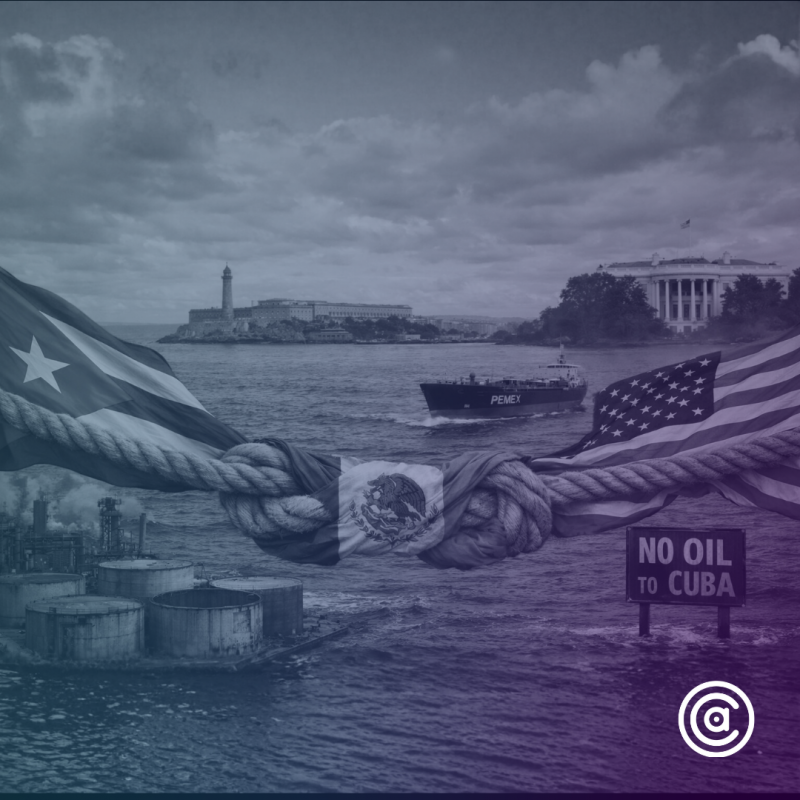
In less than a month, Mexico went from being Cuba’s main oil supplier to suspending shipments. President Claudia Sheinbaum has insisted that Cuba has not been an issue in her conversations with President Trump and has reiterated that Mexico’s decisions in its relations with other countries are sovereign, but to explain the radical change in support for Cuba, she has had to juggle arguments that convince no one.
There are four elements to consider regarding the weight that the Cuban issue may have on the alliance formed by the Morena movement and its Fourth Transformation, and on Mexico’s sovereignty: the historical relationship of Mexican governments with the Cuban Revolution, the significance of revolutionary Cuba for the Mexican left, the government’s inconsistent discourse, and the silence of supporters of the Cuban regime.
- Cuba and the Mexican state. Mexico has had a very special understanding of the Cuban revolutionary process, viewing it through the lens of the Mexican social revolution and the US blockade, something that resonates deeply in the Mexican political psyche. For the revolutionary governments of the Institutional Revolutionary Party (PRI), in the latter part of the XX Century, Cuba became, starting in 1960, an opportunity to distance themselves from the United States and shape an independent and sovereign foreign policy that was clearly expressed with Mexico’s lone vote against Cuba’s expulsion from the Organization of American States (OAS) at a meeting in Punta del Este, Uruguay, in January 1962. Since then, even under rightists´ PAN governments, Cuba has received support from Mexico and its form of government has been respected despite human rights violations and the lack of democracy.
- The significance of Cuba for the left. The defense of the Cuban Revolution and its regime has been one of the most distinctive and cherished banners of the Mexican left, which has repeatedly taken to the streets to express its support for the Cuban people and reject the US blockade. Governments of all parties have used the relationship with Cuba as a way to build bridges with sectors of the Mexican left and prevent their radicalization as part of an understanding with the Cuban government.
- The zigzagging discourse. The president has struggled to maintain a consistent discourse on the Mexican government’s support for Cuba through oil shipments. The combative and sovereign discourse she previously used to explain the relationship with Cuba has disappeared. The suspension of oil shipments to Cuba was acknowledged only after an international news agency revealed it. The explanation of the sovereignty of the Mexican state gave way to the sovereignty of Pemex and the issue became a contractual matter, only to later return to the line of humanitarian support and, finally, after President Trump’s threats to impose tariffs on countries that send oil to Cuba, it became a matter of alarm due to the humanitarian crisis that could ensue.
- The silence of the pro-Castro faction. Throughout this episode, the silence of Mexican supporters of the Cuban government is surprising. In a similar situation involving a government from a party other than Morena, they would have set social media ablaze and taken to the streets in solidarity with the island. Today, at the most critical moments in the life of the Cuban socialist government, the Mexican left has remained silent, most likely with the intention of avoiding putting additional pressure on President Sheinbaum’s government. It is difficult to anticipate the cost that Mexico’s distancing from Cuba will have internally between the leftist Morena government and groups sympathetic to the Cuban regime, but it will most likely have an impact.
The situation in Cuba, as well as the arrest of Venezuelan President Nicolás Maduro, have put the Mexican government on a collision course with Donald Trump’s administration. Despite her rhetoric about respecting sovereignty, President Sheinbaum appears to have yielded to pressure from the United States. Today, she is waiting for Washington to explain the scope of the tariff measures it will impose on countries that support Cuba in order to define her position. In the past, the response would have been automatic. In the absence of a coherent discourse and with abundant examples that cast doubt on the government’s actions, President Sheinbaum’s pro-sovereignty rhetoric today sounds as empty as the oil storage tanks at the Ñico López refinery in Havana.