Antonio Ocaranza Fernández
In democracies, the relationship between the media and power is, by nature, tense. The media exists to hold those in power accountable for their actions or omissions and to act as a counterweight to the decisions of politicians and officials that affect collective interests. This role makes the powerful uncomfortable, even those who recognize that the press plays an indispensable role in democratic balance. Controlling journalists, silencing criticism, or pressuring the media to modify the tone or content of their coverage is a constant temptation for those in power.
In recent years, this tension between the media and those in power has been particularly visible in Mexico and the United States. The governments of the Fourth Transformation and Donald Trump have coincided in interpreting media scrutiny as part of a political agenda contrary to their projects, rather than as a legitimate function of democracy.
The ways in which both governments have attempted to condition or pressure the media are varied, ranging from the use of legal and regulatory instruments to the discretionary management of contracts and tenders and access to public resources and government events.
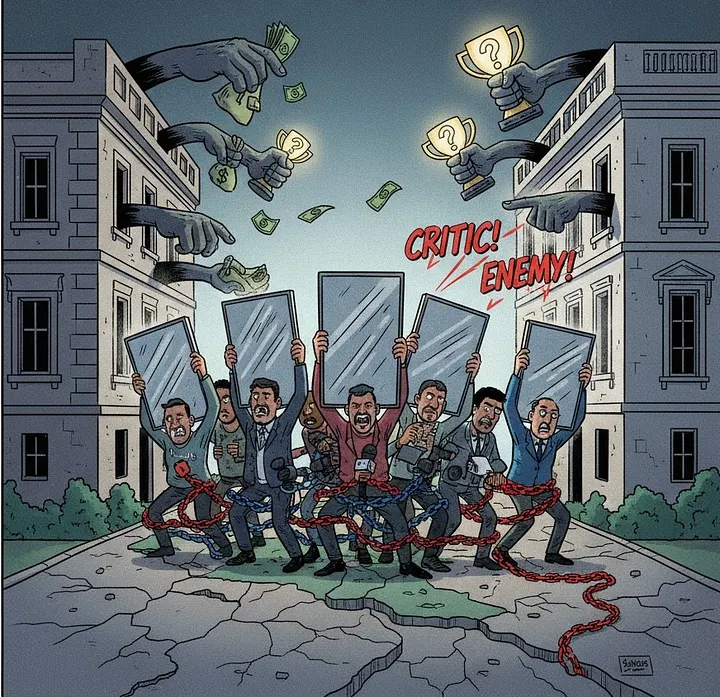
1) Financial pressures. The Trump administration has eliminated or reduced public funding for media outlets such as National Public Radio (NPR) and the Public Broadcasting Service (PBS), alleging liberal editorial bias. In Mexico, the budget for official advertising campaigns has been significantly reduced and redirected to media outlets whose editorial line is closer to the government.
2) Financial rewards. In Mexico, where many media outlets are part of consortiums with diverse business interests, the government can influence coverage by awarding contracts, granting permits, or providing access to public resources that benefit a company within the group. In the United States, although the regulatory structure limits the discretion of the executive branch, large media conglomerates also have economic interests that are subject to government decisions—mergers, spectrum concessions, tax incentives—which can function as more subtle mechanisms of pressure or reward. In both contexts, economic decisions become, in effect, instruments of political discipline.
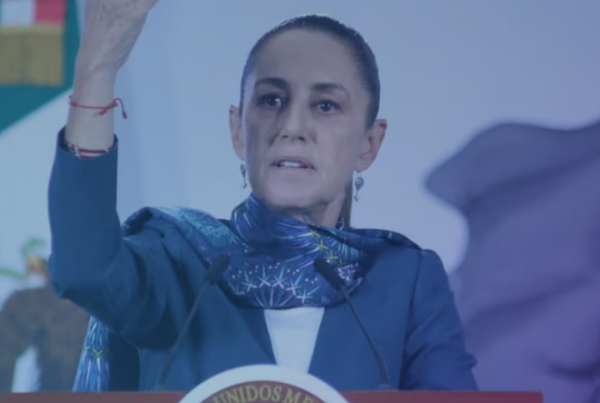
3) Public calls to cancel or censor content. Trump and his circle have celebrated or pushed for the cancellation of critical programs—such as Jimmy Kimmel’s—and have maintained persistent rhetoric against networks and commentators considered hostile. In Mexico, both López Obrador and Claudia Sheinbaum have publicly blamed journalists and media outlets for spreading “campaigns” against them, contributing to polarization by presenting them as spokespersons for interests opposed to the people. With the section El Detector de Mentiras (The Lie Detector), incorporated into the president’s press conferences, the government seeks to expose content and news that it considers part of media disinformation. On occasion, as part of economic negotiations with those in power, some media outlets agree to remove uncomfortable spaces or columnists.
4) Access to press conferences and credentials. The White House has threatened to restrict access to conferences and events to media outlets such as the Associated Press in response to disagreements over editorial criteria, while favoring more sympathetic alternative media outlets. In Mexico, participation in the morning press conferences and the allocation of questions tend to benefit media outlets close to the government, creating an unequal information ecosystem.
5) Legal and criminal actions. Trump has filed defamation lawsuits and multimillion-dollar complaints against newspapers and journalists as part of a strategy that can be intimidating due to its cost and length. He has also hinted at regulatory sanctions through the Federal Communications Commission (FCC). In Mexico, direct criminal proceedings against journalists are less common at the federal level, but the threat of withdrawing concessions from inconvenient businessmen remains. Even more disturbing is the physical risk faced by reporters in various parts of the country, where violence and impunity have a silencing effect that amplifies self-censorship.
Governments will always be tempted to control the media, but it is less clear how willing we are—as societies—to defend the right to be informed by free and critical voices. Because when those in power succeed in making the media docile or complacent, silence is the clearest sign that democracy is beginning to run out of oxygen.