
Antonio Ocaranza
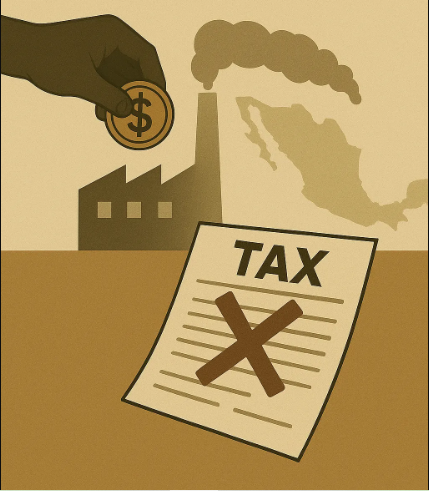
The governments of the Fourth Transformation have stigmatized certain industries on the grounds that their products or processes undermine the public good they claim to defend. This has allowed them to justify measures such as restricting mining activity and banning the use of fertilizers because of their effects on the environment, or imposing special taxes on products blamed for damaging the health or undermining the safety or social cohesion of Mexicans.
This process of stigmatization, with which the government fuels the impression that the products and activities of industry generate consequences contrary to the values and expectations of society, has been very effective. It has left companies with few resources to convince legislators and public officials of the inappropriateness or injustice of these measures.
An industry is more vulnerable when the effects of its products are associated with collective harm—such as obesity, violence, or disease. In this way, in addition to being a source of revenue, taxes become mechanisms to support public policies in favor of health and safety, while reinforcing the government’s social legitimacy and its narrative of justice.
Presented in this way, sectors such as high-calorie or sweetened beverages, tobacco, alcohol, and violent video games become stigmatized, turned into public enemies with little chance of effectively defending their products or mobilizing allies who can influence the political class.
Over the past seven years, the governments of the Fourth Transformation have followed a five-step pattern to stigmatize products and industries:
- Construction of the narrative of harm. Arguments—in many cases lacking scientific rigor—are put forward about the negative consequences of consuming a product or engaging in an activity, in order to give technical and social legitimacy to actions against them.
- Stigmatization. A product or activity, and its industry, are presented as contrary to the values and expectations of Mexican society.
- Compensation measures. The government restricts or prohibits activities, even going so far as to consider them illegal. If consumption cannot be prohibited, taxes are established as a prevention mechanism or to finance the treatment of its negative effects.
- Isolation. The government positions itself as the defender of society, while companies’ efforts against official measures are characterized as a simple defense of profits. This nullifies the mobilization of allies because it raises the reputational costs of coming to their defense.
- Consolidation of the narrative framework. The successful implementation of policies and taxes, without major social opposition, reinforces in the public imagination the idea that the measures are valid and have social support.
This process is applicable to most industries because there are many detractors and interest groups seeking to correct negative impacts or obtain concessions. That is why it is vital for companies to identify aspects of their activity that could be stigmatized. Making an inventory of vulnerabilities—the social impact of products, the origin of the company, social legitimacy, reputational assets, media visibility, mitigation actions, and history of conflicts—is essential for designing a preventive defense.
Today, when “the people” are used as justification for government actions, there is plenty of room for those seeking to affect an industry to find political sponsors and turn grievances into public sins that warrant corrective policies.
In an environment where grievances easily become political rallying cries, industries cannot limit themselves to reacting once they have already been stigmatized. They need to shield themselves with social legitimacy, demonstrate tangible benefits, and build alliances beyond their own economic interests. Because in the official narrative, any company can become a symbol of the “enemy of the people” overnight. And in that arena, neither technical arguments nor legal resources are enough: the only thing that can make a difference is the strength of the social trust they have managed to earn before being questioned.