Antonio Ocaranza Fernández
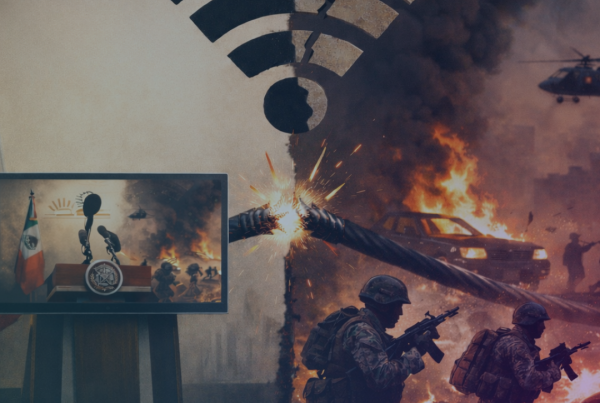
The year 2026 began with a new and darker cloud hanging over Mexico: the incursion of US special forces into Venezuela to arrest President Nicolás Maduro. Since then, the recurring question has been: is the US preparing an action within Mexican territory to attack drug traffickers?
The operation in Venezuela and the insistent statements by President Donald Trump and Marco Rubio—to the effect that Mexico must do more against drug trafficking, even with direct support from US agencies—have forced the Mexican government to reevaluate both its security strategy and its reading of Washington.
In recent days, the Mexican government’s response has been more moderate and less rhetorical. This is reflected in Mexico´s President Sheinbaum’s statements at her morning press conferences: the tone is less combative and nationalistic; the national anthem is no longer recited (“Masiosare” has been left in the drawer); instructions have been given to her cabinet to intensify dialogue with US counterparts; and there has been a more systematic defense of the actions and results of the fight against drug trafficking.
This new stance seems to be explained by an analysis of the sequence of actions that the United States deployed before the incursion into Venezuela, several of which already appear in its strategy toward Mexico.
In the Venezuelan case, six steps can be identified.
- Judicialization of the adversary. The first step was not military, but legal: formal accusations of drug trafficking, terrorism, and organized crime against Venezuelan political leaders, accompanied by million-dollar rewards. This delegitimizes the attacked government internationally and constructs a legal narrative framework that allows subsequent actions to be presented not as intervention, but as the execution of justice.
- Semantic reconfiguration. Language changes. The regime is no longer authoritarian, populist, or dictatorial; it becomes narco-terrorist, and criminal organizations, supposedly associated with the state, are reclassified as terrorist threats. The enemy can be attacked without asking permission.
- The “defensive” military cordon closes in. Deployment begins. Aircraft, ships, “anti-narcotics” exercises. The United States normalizes its military presence near the target country. All under the narrative of containment, surveillance, and protection of trade routes.
- Use of force to test limits. Limited, targeted, seemingly tactical attacks. Maritime interdictions, neutralization of vessels, surgical operations against “criminal actors.” Public opinion is accustomed to the use of real force, international reactions are analyzed, and the regime’s internal responses are measured.
- Parallel political pressure. Divide, neutralize, isolate. At the same time, diplomacy intensifies quietly. Contacts with key actors in the regime, private messages, implicit offers, explicit warnings. The United States attempts to fracture before striking at the decisive moment with the least possible resistance.
- The grand finale. When the incursion finally occurs, the outcome is swift because everything else has already happened. The coup is the conclusion of the strategy.
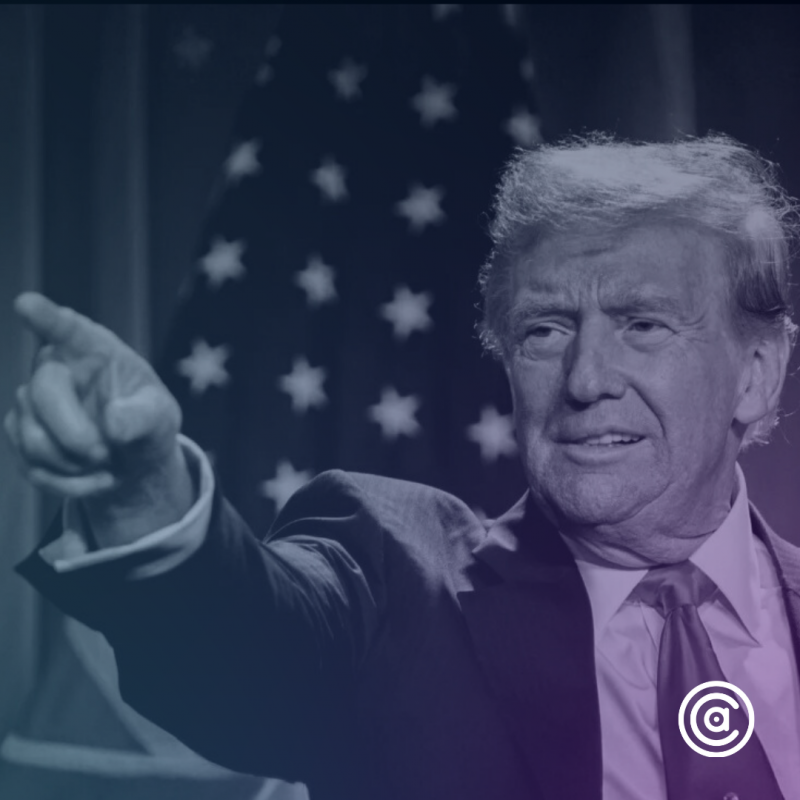
Trump is no longer the man of simple bravado. In Latin America, redefined as his exclusive sphere of influence, he has no qualms about showing and exercising his power without his allies in Europe or his adversaries, China and Russia, objecting to his actions and without the nations of the region being able to appeal to international law to prevent them.
When a country begins to be prosecuted from abroad, when its internal security problem is redefined as a regional threat, when the U.S. military presence becomes commonplace, and when the first uses of force do not generate diplomatic costs, the checklist is practically complete.
For years, in Mexico the opposition has used the warning of “becoming Venezuela” as a political slogan. No one ever thought that this analogy could be extended to the risk of a US incursion. Although the reality in Mexico is very different, from the Trump administration’s perspective there are uncomfortable parallels: the territorial expansion of organized crime, possible areas of political collusion, and external narratives linking security, drugs, and migration, fueling the idea of a “narco-state.”
For Mexico, the lesson is clear: sovereignty is no longer defended with speeches alone, but by avoiding getting caught up in foreign categories. It involves regaining effective territorial control, reducing gray areas between politics and crime, and constructing its own narrative that is verifiable and credible to the United States. It is not a matter of confrontation or blind alignment, but rather of not blindly following the checklist that others have already gone through, step by step.