Antonio Ocaranza Fernández
President Claudia Sheinbaum begins 2026, the first calendar year in which she can be evaluated as the sole person responsible for her decisions. To a certain extent, 2025 was conditioned by goals and commitments inherited from the last year of President López Obrador’s administration. The 2025 Expenditure Budget, for example, had to be negotiated between the two; the 2026 budget did not.
What happens—or does not happen—in 2026 will be the sole responsibility of the president. A president who, moreover, has more tools of power at her disposal than her predecessor did. In addition to the political capital inherited from her resounding election results of 2024, Sheinbaum benefits from the consolidation of reforms that concentrate power in the Executive branch: the disappearance of autonomous bodies, the configuration of a sympathetic judiciary, and the alignment of key investigative and law enforcement agencies, such as the Attorney General’s Office and the Ministry of Public Security.
Sheinbaum begins 2026 with more power than any president since 1994. But this concentration of power also carries a major risk: there are no more excuses. The president is now the main arbiter of the country’s political destiny. If something goes wrong, the idea will take hold that it is not due to the opposition or “neoliberal forces,” but to internal tensions within her own movement.
As happened in 1995, when former President Salinas de Gortari was blamed for many of the problems at the beginning of presidente Ernesto Zedillo’s government, his succesor, there will be no shortage of people wondering whether López Obrador supporters—Adán Augusto López, Ricardo Monreal, or some Morena governors—are behind the most challenging episodes for the president.
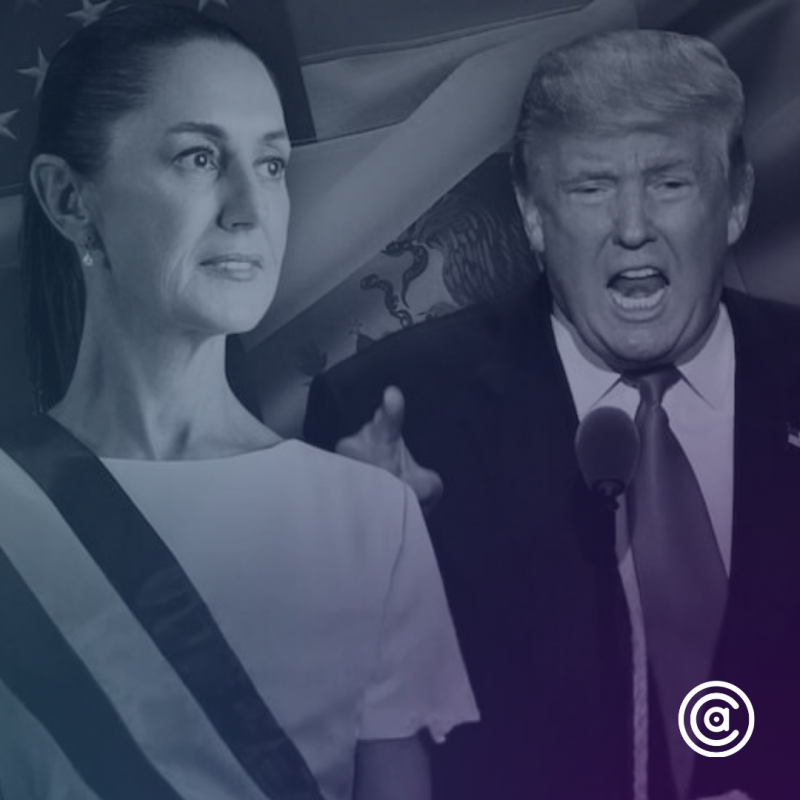
Throughout 2026, Sheinbaum’s leadership will be tested on three central fronts: the spark of more solid economic growth, the revision of the UMSCA free trade agreement, and intense political pressure from President Donald Trump.
1.- Solid economic growth. The governments of the Fourth Transformation (2018-2030) so far have been poor generators of economic growth. Between 2019 and 2025, the Mexican economy has grown at rates below 1% per year. The government distributes resources through social programs from a pie that it has failed to grow and resorts to redefining welfare indicators to counter criticism of economic stagnation.
It is necessary to decisively stimulate private investment to accelerate the creation of well-paid jobs and avoid being forced to propose a tax reform that increases the tax burden to feed the treasury.
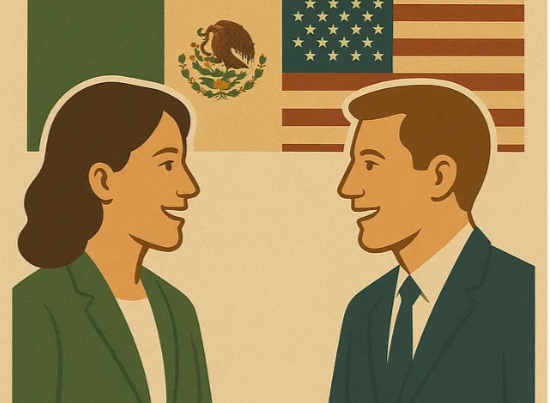
2.- An uncertain trilateral treaty. More than half of 2026 will be spent under uncertainty about the future of the trade agreement with the United States and Canada. There is consensus that it has been beneficial for all three countries and should be maintained, but the devil is in the details. No one can predict whether Donald Trump’s administration will push for adjustments that significantly alter the rules of the game for specific industries or sectors.
President Sheinbaum, following in the footsteps of her predecessor, does not seem particularly inclined to travel to the United States to mobilize allies and build a more favorable negotiation for Mexico. She is confident that foreign policy objectives can be achieved from the pulpit of her daily press conferences in the Treasury Room of the National Palace.
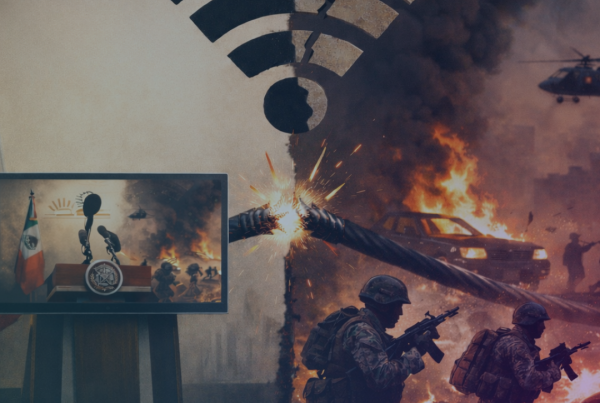
3.- The Donroe doctrine. The arrest of Nicolás Maduro in Caracas to face drug trafficking charges in a New York court would be the clearest expression of a new Washington policy toward Latin America. Mexican foreign policy is on a collision course with the United States on several fronts: criticism of the use of force and the violation of Venezuelan sovereignty; growing pressure on Cuba, now affected by reduced Venezuelan oil supplies and the possible cancellation of payments related to the dispatch of doctors and political operators; and persistent speculation about a possible US intervention in Mexico to capture drug traffickers or even Governors with alleged links to organized crime.
2026 will not be an easy year. With concentrated power, controlled discourse, and weakened checks and balances, the margin for error is reduced to zero. If the project fails, there will be no external adversaries to blame. The World Cup and the eternal dream that Mexico´s team advances to a fifth game will offer Mexicans an emotional respite. But when we wake up in August, reality will still be there, and with it, the uncomfortable question: Will Mexico continue to wait for growth, certainty, and direction?