
Antonio Ocaranza Fernández
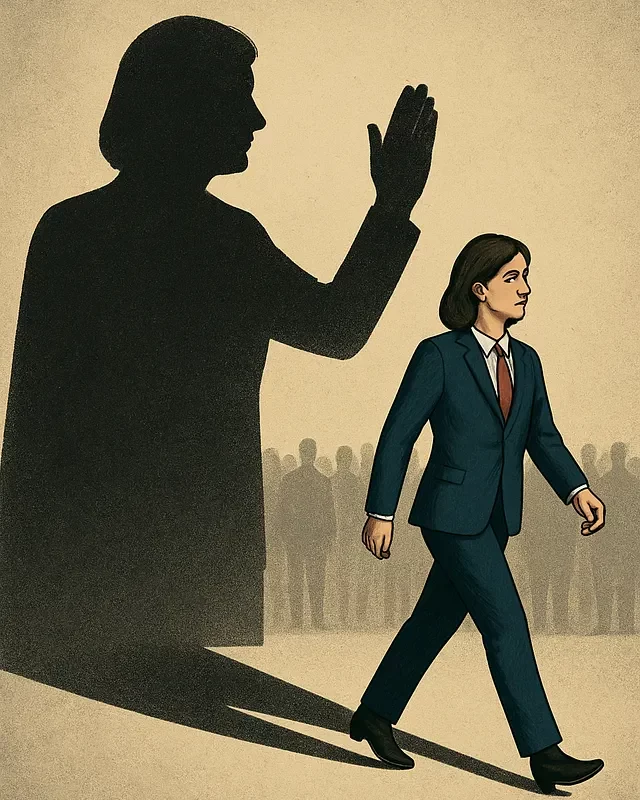
Inheriting power from a charismatic leader means starting at a disadvantage. The public compares. Rivals sense weakness. The apparatus still responds to the previous leader. The shadow is long. The challenge is twofold: gaining legitimacy among citizens and controlling the real levers of power. Those who succeed use the initial crisis as a springboard; those who fail end up erased from memory by their predecessor.
However, some have managed to turn this fragile start into an opportunity to consolidate their position. In this process of consolidating the power of a new leader, there are six elements that define succession: the origin of the vacuum, the type of regime, purges, the destruction of the previous leader’s image, the exploitation of the legacy, and the redefinition of the project.
1.- The origin of the vacuum. Many leaders assume power after the death of the movement’s leader, whether from natural causes or in the midst of an uprising or military coup. Successors are usually part of the inner circle and inherit the mission of preserving the legacy: the KIM family dynasty in North Korea, the Castro brothers in Cuba, the succession from Juan Domingo Perón to Isabel Martínez in Argentina, from Néstor Kirchner to Cristina Fernández in Argentina, or the transition in the Philippines, where after the fall of Ferdinand Marcos, symbolic power passed in part to his wife Imelda.
Other, rarer cases occur when the leader decides to step down voluntarily, such as Nelson Mandela at the end of his term in South Africa or Andrés Manuel López Obrador when he handed over the reins to Claudia Sheinbaum in Mexico. In these scenarios, the retired leader becomes a moral reference point for the regime.
2.- The type of regime. The way a leader is replaced depends on the rules of the political system. In democracies with a vice president, succession is clear and immediate. In single-party regimes, succession can be the result of internal strife, as in the USSR after the deaths of Lenin or Stalin, in China after Mao Zedong, or in Vietnam after Ho Chi Minh.
3.- Purges. Succession is often an opportunity to eliminate rivals and consolidate control. Nikita Khrushchev, upon Stalin’s death, neutralized Lavrenti Beria’s network. In China, after Mao’s death, the arrest of the “Gang of Four” allowed Deng Xiaoping to strengthen his position. In Mexico, Lázaro Cárdenas expelled Plutarco Elías Calles from the country and subjugated his support bases. More recently, Abdel Fattah el-Sisi in Egypt eliminated influential figures in the army and the Muslim Brotherhood who could challenge his leadership.
4.- The destruction of the leader. Sometimes, the political or moral demolition of the predecessor is the founding act of the new leadership. The 20th Congress of the Communist Party of the USSR (1956) was the stage on which Khrushchev denounced Stalin’s crimes, marking a turning point.
5.- Capitalizing on the legacy. It is not always necessary to destroy the previous leader or redefine the entire project: sometimes it is enough to reappropriate symbols, speeches, and gestures from the past to project a narrative that legitimizes the successor. The heir takes elements of the legacy and reinterprets them to position himself as the protagonist of the new era. Vladimir Putin inherited part of Boris Yeltsin’s apparatus, but wrapped it in nationalist rhetoric that presented him as the restorer of Russian greatness.
6.- Redefining the project. In other cases, succession is an opportunity to reorient the movement’s course. Deng Xiaoping, with the Four Modernizations, turned the Chinese economy toward the market without relinquishing political control. Claudia Sheinbaum seeks to do the same by building the “second floor” of the Fourth Transformation in Mexico with a technical and sustainable approach.
In politics, inheriting power is not the same as governing. The true test of a successor is not in keeping the baton, but in deciding when to use it to chart their own course. Some understand this and turn the shadow into a springboard; others cling to the memory of their predecessor and remain trapped in it, as in the case of Isabel Perón and Cristina Fernández, who were unable to revitalize Peronism and Kirchnerism and lost power.
Deep down, every succession is an act of rebellion: even when it promises continuity, power is only consolidated when the heir dares to kill—politically—the father who gave him the throne.